
Ram 1500 Fuel Efficiency: Comparing MPG By Trim & Year
The 2027 Ram 1500 gas mileage is an EPA-estimated 20/25/22 MPG (City/Highway/Combined).1 This configuration, using the standard 3.6-liter Pentastar V-6 engine, is just below the top non-diesel powertrains in Ram brand history in terms of fuel efficiency, but the 2027 Ram 1500 has three additional engines to consider. Which Ram 1500 fuel economy rating best fits your lifestyle? At Bomnin CDJR Doral, we'll help you find the perfect travel companion.
Ram 1500 Gas Mileage by Configuration
The 2027 Ram 1500 gas mileage depends primarily on your engine choice, though specific trim levels have access to different engines. Several trims, especially above the Laramie level, come only in 4x4, improving handling but reducing MPG ratings. A new Ram 1500 for sale has MPG ratings that look like this:
| Trim Level | Drivetrain | Engine Options | EPA-Est. MPG (Cty / Hwy / Comb) (4x2) | EPA-Est. MPG (Cty / Hwy / Comb) (4x4) |
| Tradesman | 4x2, 4x4 |
|
|
|
| Express / Black Express | 4x2, 4x4 |
|
|
|
| Warlock | 4x4 |
| N / A |
|
| Big Horn / Lone Star | 4x2, 4x4 |
|
|
|
| Laramie | 4x2, 4x4 |
|
|
|
| Rebel | 4x4 |
| N / A |
|
| RHO | 4x4 | 3.0L twin-turbo I-6 H.O. | N / A | 15 / 21 / 17 (3.0L H.O.)1 |
| TRX SRT | 4x4 | 6.2L supercharged V-8 | N / A | 10 / 14 / 12 (6.2L)1 |
| Limited | 4x4 |
| N / A |
|
| Limited Longhorn | 4x4 |
| N / A |
|
| Tungsten | 4x4 | 3.0L twin-turbo I-6 H.O. | N / A | 15 / 21 / 17 (3.0L H.O.)1 |
| Rumble Bee | 4x4 |
| N / A |
|
Notably, your choice of add-ons and accessories may have a minor impact on your overall Ram 1500 fuel efficiency beyond trim and engine choice. Plus, if you choose a distinct cabin or bed, you may find your fuel economy to be lower than the EPA-estimated level. For a more accurate estimate of what MPG your Ram 1500 model will have, please contact our team.
Ram 1500 Gas Mileage by Year
The 3.6-liter Pentastar V-6 has a storied history in the modern Ram 1500 lineup, and modern Ram models have enjoyed its efficient performance for a generation. However, between 2019 and 2026, this model could achieve an EPA-estimated 20/26/23 MPG (City/Highway/Combined);1 even more than this year! Here's how the modern Ram 1500 gas mileage stacks up to previous years, outside of all-electric and diesel powertrains:
| Model Year | Best Gas EPA-Est. MPG (Cty / Hwy / Comb) |
| 2026 | 20 / 25 / 22 (3.6L)1 |
| 2025 | 20 / 26 / 23 (3.6L)1 |
| 2024 | 20 / 26 / 23 (3.6L)1 |
| 2023 | 20 / 26 / 23 (3.6L)1 |
| 2022 | 20 / 26 / 23 (3.6L)1 |
| 2021 | 20 / 26 / 23 (3.6L)1 |
| 2020 | 20 / 26 / 23 (3.6L)1 |
| 2019 | 20 / 26 / 23 (3.6L)1 |
| 2018 | 17 / 25 / 20 (3.6L)1 |
| 2017 | 17 / 25 / 20 (3.6L)1 |
| 2016 | 18 / 25 / 21 (3.6L)1 |
| 2015 | 18 / 25 / 21 (3.6L)1 |
| 2014 | 18 / 25 / 21 (3.6L)1 |
| 2013 | 18 / 25 / 21 (3.6L)1 |
| 2012 | 14 / 20 / 16 (3.7L / 4.7L / 5.7L)1 |
| 2011 | 14 / 20 / 16 (3.7L / 5.7L)1 |
| 2010 | 14 / 20 / 16 (3.7L / 5.7L)1 |
| 2009 | 14 / 20 / 16 (3.7L / 5.7L)1 |
| 2008 | 16 / 19 / 17 (3.7L)1 |
| 2007 | 14 / 20 / 16 (3.7L)1 |
| 2006 | 14 / 20 / 16 (3.7L)1 |
| 2005 | 14 / 20 / 16 (3.7L)1 |
| 2004 | 14 / 19 / 16 (3.7L)1 |
| 2003 | 14 / 19 / 16 (3.7L)1 |
| 2002 | 14 / 19 / 16 (3.7L)1 |
| 2001 | 14 / 18 / 16 (3.9L)1 |
| 2000 | 14 / 19 / 16 (3.9L)1 |
| 1999 | 14 / 20 / 16 (3.9L)1 |
| 1998 | 14 / 20 / 16 (3.9L)1 |
| 1997 | 14 / 20 / 16 (3.9L)1 |
| 1996 | 15 / 19 / 16 (3.9L)1 |
| 1995 | 15 / 20 / 16 (3.9L)1 |
| 1994 | 15 / 19 / 17 (3.9L)1 |
How To Improve Gas Mileage on the Ram 1500
If you're not getting the Ram 1500 MPG you expect, that's not necessarily cause for alarm. The EPA tests each model under optimal conditions, and it's rare for your drive to match those scenarios. However, you can take a few steps to get closer to EPA-estimated levels.
Keep Up With Maintenance
One of the fastest ways an engine can lose efficiency is through maintenance issues. Check oil levels, replace filters, and ensure the engine hasn't suffered significant wear and tear. Other parts of your model, such as the axles, can also prevent your truck from reaching optimal performance.
Check Your Tire Pressure
Before taking off, ensure that tires are at the correct PSI. Tires that aren't fully inflated require the engine to spin the axles more to reach the same speed. If they're worn down, you may want to get them rotated or replaced at a trusted dealership.
Avoid Start and Stop Traffic
While most modern Ram 1500 engines come with Start/Stop technology, getting into bumper-to-bumper traffic will still put heavy strain on your engine.

Check the Speed Limit
The speed limit is actually a good indicator of where your engine's recommended operating range is. If you find yourself driving over the speed limit, your engine works harder than it's optimized for, and you might see your Ram 1500 gas mileage drop as a result. Additionally, if you're towing a larger trailer, air resistance alone can reduce fuel efficiency.
Remove Excess Weight
Whether you're towing or hauling, any extra weight on your engine will cause it to be less fuel efficient. Consider removing unnecessary cargo from your cabin or truck bed before taking off.
Keep It Clean
Cleaning the exterior of your truck not only helps you turn heads on the road, but it also slightly reduces drag. If you like dirty off-roads, spending a bit of time spraying down the exterior can make a difference.
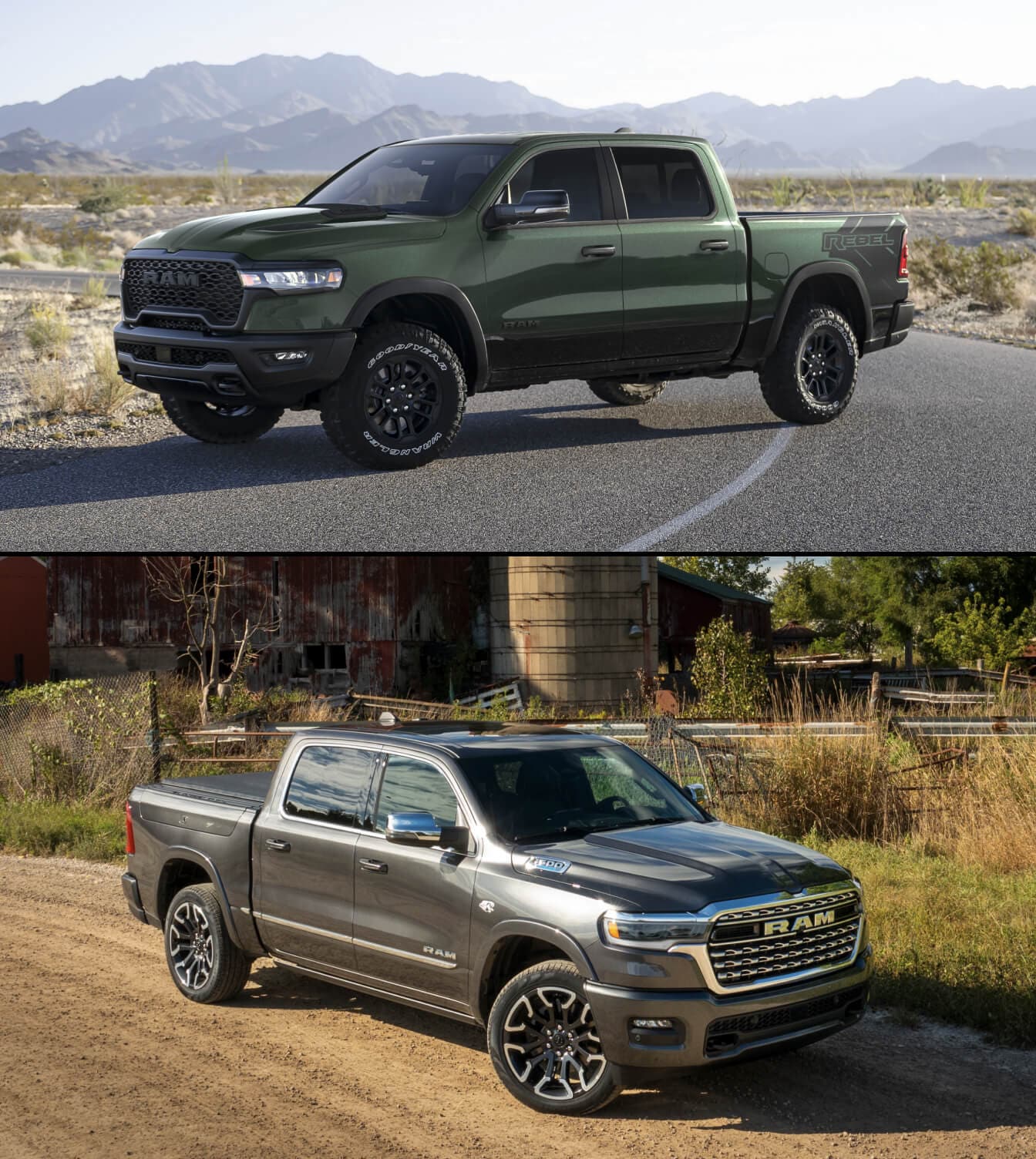
Explore Ram 1500 Gas Mileage at Bomnin CDJR Doral
If you're ready to invest in a full-size truck that cares about each drop of gas, our dealership is a must-visit location. Our representatives will be happy to walk you through the varied trim levels and introduce you to our limited-time Ram 1500 lease deals.
If you want to spend more time researching, we can certainly lend a hand! Check out our guide to Ram 1500 towing capacity by year to see if a specific new or used Ram truck will meet your needs.
Frequently Asked Questions
How many MPG does a Ram 1500 with a 5.7-liter HEMI get?
With the 5.7-liter HEMI V-8, the Ram 1500 can achieve an impressive 16/20/18 MPG (City/Highway/Combined).1 Depending on trim level and configuration, other Ram 1500 models equipped with the HEMI engine can be rated for 15/23/17 MPG (City/Highway/Combined) or 15/22/17 MPG (City/Highway/Combined).1
Are Ram 1500 trucks good on gas?
Compared to other full-size, gas-only trucks, the Ram 1500 is a fuel-efficient truck with great benefits. As you'll see in our Ram 1500 vs. Ford F-150 comparison, the Ram 1500 reaches an equivalent highway rating to the Ford F-150. 2 Or you can check our Ram 1500 vs. Chevy Silverado 1500 comparison and see how much more efficient the Ram 1500 is.3
Which Ram 1500 engine gets the best gas mileage?
For 2027, the most fuel-efficient Ram 1500 engine is the standard 3.6-liter V-6. The PentaStar engine provides the highest payload capacity and the best gas mileage for the Ram full-size truck, achieving a maximum of 20/25/22 MPG (City/Highway/Combined).1 The other three engines have slightly reduced ratings overall.
How many miles can a Ram 1500 go on a full tank?
With its standard fuel tank capacity of 26 gallons, or available 33-gallon tank, the Ram 1500 can drive up to 726 miles on a single refuel.4 The available 33-gallon tank is an option for many popular trim levels, including the Tradesman.
How big is the fuel tank on the Ram 1500?
The Ram 1500 gas tank size is 26 gallons by default. Many models will instead have a 33-gallon gas tank, providing a much further range than the standard fuel tank.
Read Our Ram 1500 Reviews:
1Estimates only. For more information, please visit the official U.S. government source for all fuel economy at www.fueleconomy.gov.
2EPA-estimated city/hwy mpg for the model indicated. See fueleconomy.gov for fuel economy of other engine/transmission combinations. Actual mileage will vary. On plug-in hybrid models and electric models, fuel economy is stated in MPGe. MPGe is the EPA equivalent measure of gasoline fuel efficiency for electric mode operation.
3EPA-estimated 18 city/21 hwy 2.7-liter turbocharged four-cylinder.
4Estimated ranges provided are subject to variation based on factors such as fuel levels, driving habits, road conditions, and individual vehicle performance. These estimates should be used for comparison purposes only and shall not be solely relied upon.